

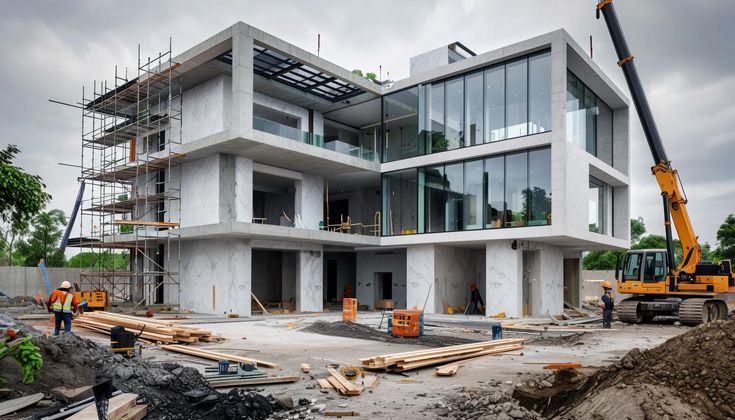
Selecting the right contracting model is a strategic decision that directly impacts project cost, timeline, risk allocation, and overall performance. Among the most widely used delivery methods in large-scale construction projects are EPC (Engineering, Procurement, and Construction) and Design-Build.
While both models consolidate design and execution under a single contractor, they differ significantly in structure, risk distribution, and project management approach.
Understanding the difference between EPC and Design-Build enables investors and developers to choose the model that aligns best with their project objectives.
What is an EPC contract in construction?
EPC stands for Engineering, Procurement, and Construction.
Under an EPC contract, the contractor assumes full responsibility for:
- Detailed engineering and design
- Procurement of materials and equipment
- Construction and installation
- Delivery of a fully operational, turnkey facility
EPC is commonly used in complex industrial projects such as manufacturing plants, power stations, oil & gas facilities, and infrastructure developments where technical precision and integrated delivery are critical.
Advantages of EPC:
✔ Single-point accountability
✔ Reduced coordination conflicts
✔ Clear cost structure (often lump-sum pricing)
✔ Ideal for technically complex projects
✔ Turnkey delivery ready for operation
What Is Design-Build?
The Design-Build model is a contracting approach in which design and construction are integrated under a single agreement, with both the design team and contractor operating under unified management.
Unlike EPC, however, Design-Build offers greater flexibility during the execution phases and allows construction activities to begin before all design details are fully completed.
Advantages of Design-Build:
✔ Faster project delivery
✔ Improved collaboration between design and execution teams
✔ Greater flexibility for modifications
✔ Efficient for medium-sized developments
Core Differences Between EPC and Design-Build
| Factor | EPC | Design-Build |
| Project Type | Large-scale industrial projects | Commercial & residential projects |
| Delivery Model | Fully turnkey and operational | Completed according to agreed scope |
| Risk Allocation | Majority of risk transferred to contractor | Risk shared more flexibly |
| Cost Structure | Typically fixed lump-sum | May vary with design changes |
| Flexibility | More structured, less adaptable | Higher flexibility during execution |
Which Model Is Right for Your Project?
Choosing between EPC and Design-Build depends on several key factors:
- Project size and technical complexity
- Risk tolerance
- Budget clarity
- Desired level of owner involvement
- Timeline constraints
For highly technical industrial facilities requiring full operational readiness, EPC is often the preferred option.
For commercial or mixed-use projects that require adaptability and phased development, Design-Build may offer greater efficiency and collaboration.
Conclusion
The difference between EPC and Design-Build extends beyond design and construction integration. It influences risk management, cost certainty, execution flexibility, and project governance.
Selecting the right delivery model enhances project efficiency, minimizes unexpected costs, and supports long-term operational success.
If you are planning an industrial, commercial, or infrastructure project and need guidance on the most suitable contracting model:
👉 Contact us for a professional consultation
👉 Or explore our completed projects to learn more about our execution expertise